

In the realm of modern manufacturing, lean manufacturing has emerged as a revolutionary approach that aims to eliminate waste, improve efficiency, and enhance overall productivity. At the heart of many lean manufacturing processes, especially those involving material shaping and cutting, are PF cutting rules. As a supplier of PF cutting rules, I have witnessed firsthand the profound impact these tools have on lean manufacturing operations. In this blog, I will explore the role of PF cutting rules in lean manufacturing and how they contribute to achieving lean principles.
Understanding Lean Manufacturing
Lean manufacturing is a systematic method for waste minimization within a manufacturing system without sacrificing productivity. It is based on the Toyota Production System and focuses on five key principles: value, value stream, flow, pull, and perfection. The goal is to create more value for customers with fewer resources. By identifying and eliminating non - value - added activities (waste), companies can streamline their processes, reduce costs, and improve quality.
The Basics of PF Cutting Rules
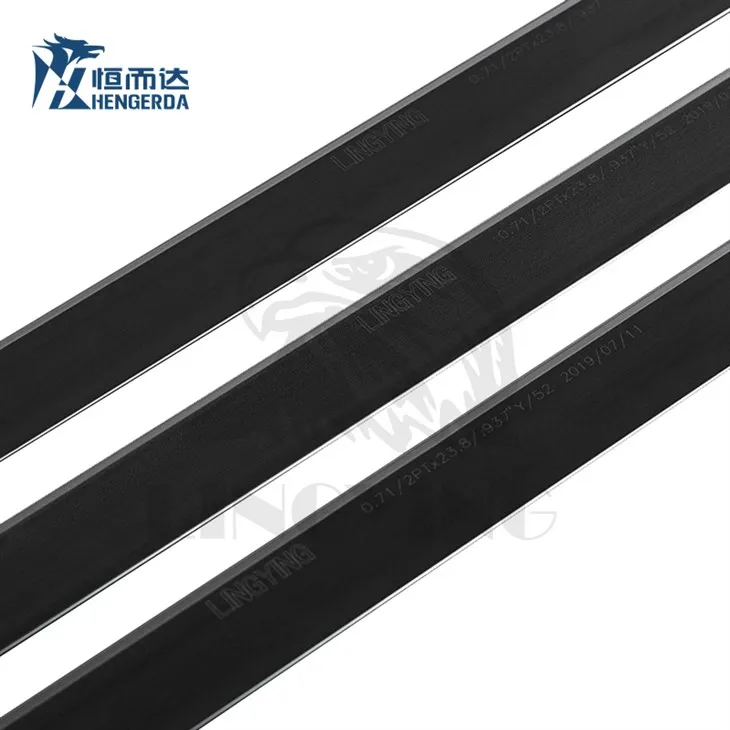
PF cutting rules are precision - engineered tools used in die - cutting applications. They come in various types, including Die Cutting Steel Rules, Creasing Rules, and Perforating Rules. These rules are made from high - quality steel and are designed to cut, crease, or perforate a wide range of materials, such as paper, cardboard, plastics, and fabrics.
1. Die Cutting Steel Rules
Die cutting steel rules are the most common type of PF cutting rules. They are used to cut materials into specific shapes. These rules are sharp and durable, allowing for precise cuts with minimal burrs or damage to the material. In lean manufacturing, die cutting steel rules play a crucial role in reducing waste. By providing accurate cuts, they ensure that the maximum amount of material is used effectively, minimizing scrap. For example, in the production of cardboard boxes, die cutting steel rules can cut the boxes with high precision, reducing the amount of excess cardboard that would otherwise be discarded.
2. Creasing Rules
Creasing rules are used to create folds in materials. They are essential in the packaging industry, where boxes and cartons need to be folded neatly. In lean manufacturing, creasing rules contribute to the flow of the production process. By creating consistent and accurate creases, they make it easier for subsequent folding and assembly operations. This reduces the time spent on manual adjustments and rework, leading to increased productivity.
3. Perforating Rules
Perforating rules are used to create a series of small holes in materials. This is useful in applications such as tear - off sections on packaging or easy - open features on products. In lean manufacturing, perforating rules help to improve the functionality of the final product while maintaining efficiency. They can be integrated into the die - cutting process, eliminating the need for a separate perforating step and reducing the overall production time.
Role of PF Cutting Rules in Lean Manufacturing
1. Waste Reduction
One of the primary goals of lean manufacturing is waste reduction. PF cutting rules contribute to this goal in several ways. Firstly, their high precision ensures that materials are cut, creased, or perforated accurately, minimizing the amount of scrap. For instance, in the textile industry, precise cutting with die cutting steel rules can reduce fabric waste by up to 20%. Secondly, the durability of PF cutting rules means that they have a long service life, reducing the need for frequent replacements. This not only saves on material costs but also reduces the waste associated with discarded rules.
2. Improved Quality
Quality is another critical aspect of lean manufacturing. PF cutting rules help to ensure consistent quality in the production process. Their sharp edges and accurate profiles result in clean cuts, smooth creases, and uniform perforations. This reduces the likelihood of defects in the final product, such as rough edges, uneven folds, or inconsistent perforations. By producing high - quality products, companies can reduce the amount of rework and customer returns, leading to significant cost savings.
3. Increased Productivity
PF cutting rules can significantly increase productivity in lean manufacturing operations. Their ability to perform multiple functions, such as cutting, creasing, and perforating in a single pass, reduces the number of processing steps. This streamlines the production process and allows for faster throughput. Additionally, the ease of use and installation of PF cutting rules mean that operators can quickly set up and change tools, minimizing downtime between production runs.
4. Flexibility
In today's dynamic manufacturing environment, flexibility is essential. PF cutting rules offer a high degree of flexibility. They can be customized to meet the specific requirements of different products and materials. For example, die cutting steel rules can be designed to cut complex shapes, allowing companies to produce a wide range of products with a single set of tools. This flexibility enables companies to respond quickly to changes in customer demand and market trends, which is a key principle of lean manufacturing.
5. Cost Savings
The combination of waste reduction, improved quality, increased productivity, and flexibility leads to significant cost savings. By reducing scrap, rework, and downtime, companies can lower their production costs. Additionally, the long service life of PF cutting rules means that the cost per cut is relatively low. Over time, these cost savings can have a substantial impact on the bottom line.
Case Studies
To illustrate the role of PF cutting rules in lean manufacturing, let's look at a few case studies.
Case Study 1: Packaging Manufacturer
A packaging manufacturer was facing challenges with high scrap rates and inconsistent quality in their cardboard box production. After switching to high - quality PF cutting rules, they were able to reduce their scrap rate by 15%. The precise cuts and creases provided by the rules also improved the overall quality of the boxes, leading to a 10% reduction in customer returns. Additionally, the increased productivity allowed them to produce more boxes in less time, resulting in a 20% increase in production output.

Case Study 2: Textile Company
A textile company was struggling with fabric waste and slow production speeds. By using PF die cutting steel rules, they were able to reduce fabric waste by 25%. The accurate cutting also improved the quality of their garments, leading to increased customer satisfaction. The streamlined production process with the new rules allowed them to increase their production capacity by 15%, enabling them to meet growing market demand.
Conclusion
PF cutting rules play a vital role in lean manufacturing. They contribute to waste reduction, improved quality, increased productivity, flexibility, and cost savings. As a supplier of PF cutting rules, I understand the importance of providing high - quality tools that meet the specific needs of lean manufacturing operations. If you are looking to enhance your lean manufacturing processes and achieve greater efficiency and productivity, I encourage you to consider our range of PF cutting rules. Contact us to discuss your requirements and explore how our products can help you take your manufacturing operations to the next level.
References
- Womack, J. P., & Jones, D. T. (1996). Lean Thinking: Banish Waste and Create Wealth in Your Corporation. Simon & Schuster.
- Liker, J. K. (2004). The Toyota Way: 14 Management Principles from the World's Greatest Manufacturer. McGraw - Hill.
- Schonberger, R. J. (1986). Japanese Manufacturing Techniques: Nine Hidden Lessons in Simplicity. Free Press.